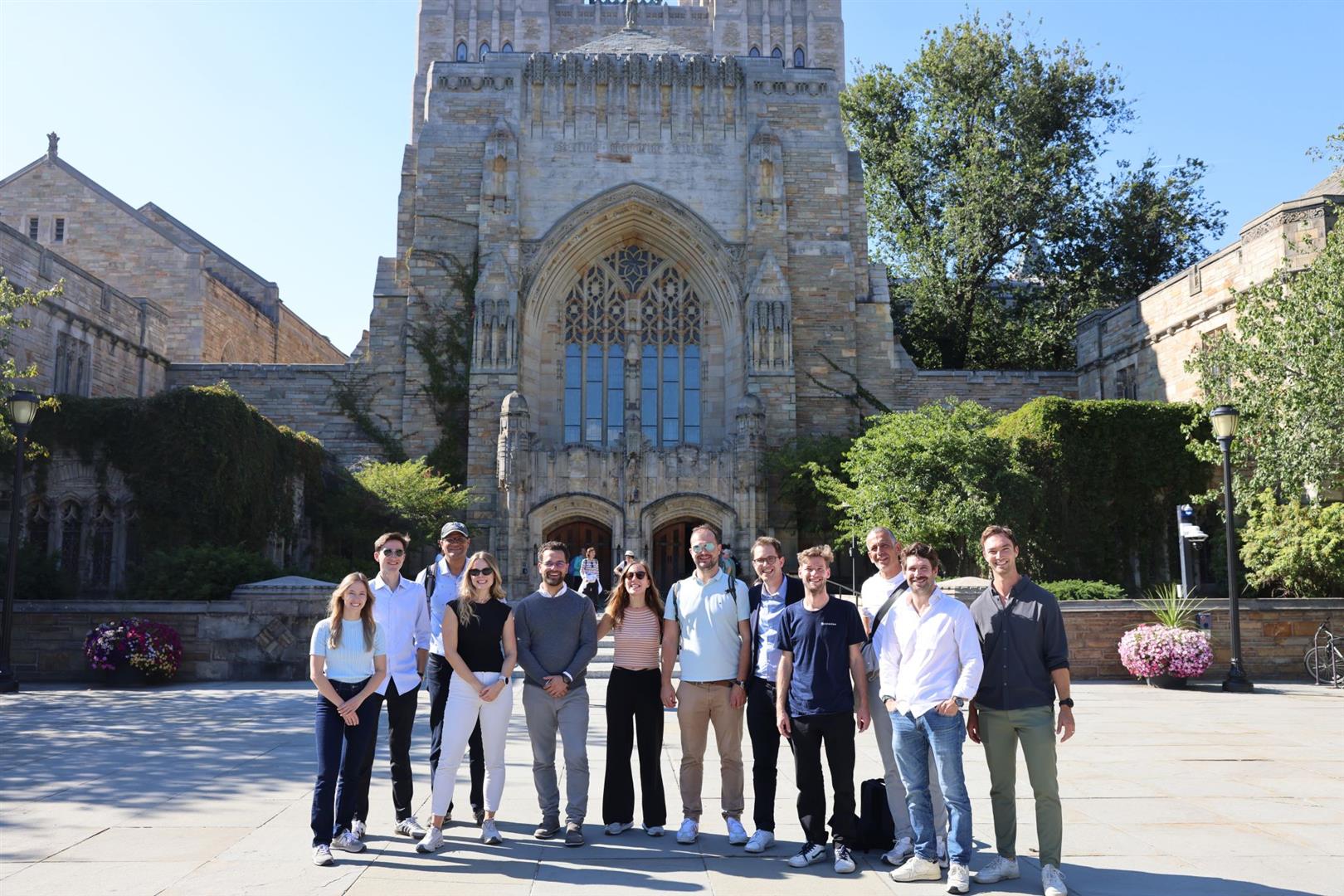
Climatetech is navigating a period of uncertainty. While climate policies and public investments face rollbacks, renewable energy has already surpassed coal in global electricity generation and continues to grow. Amid this shifting landscape, eight Swiss startups visited Boston and New York this September as part of Climate Collider, the startup exchange program powered by Innosuisse and managed by Swissnex. Over two weeks, they explored the American climatetech ecosystem – and found reason for optimism.
“We always hear the news about the political situation in the U.S., but meeting people here in Boston showed us that the space is still alive and well,” said Gaudenz Halter, co-founder of Correntics, which provides climate risk analysis for global supply chains.
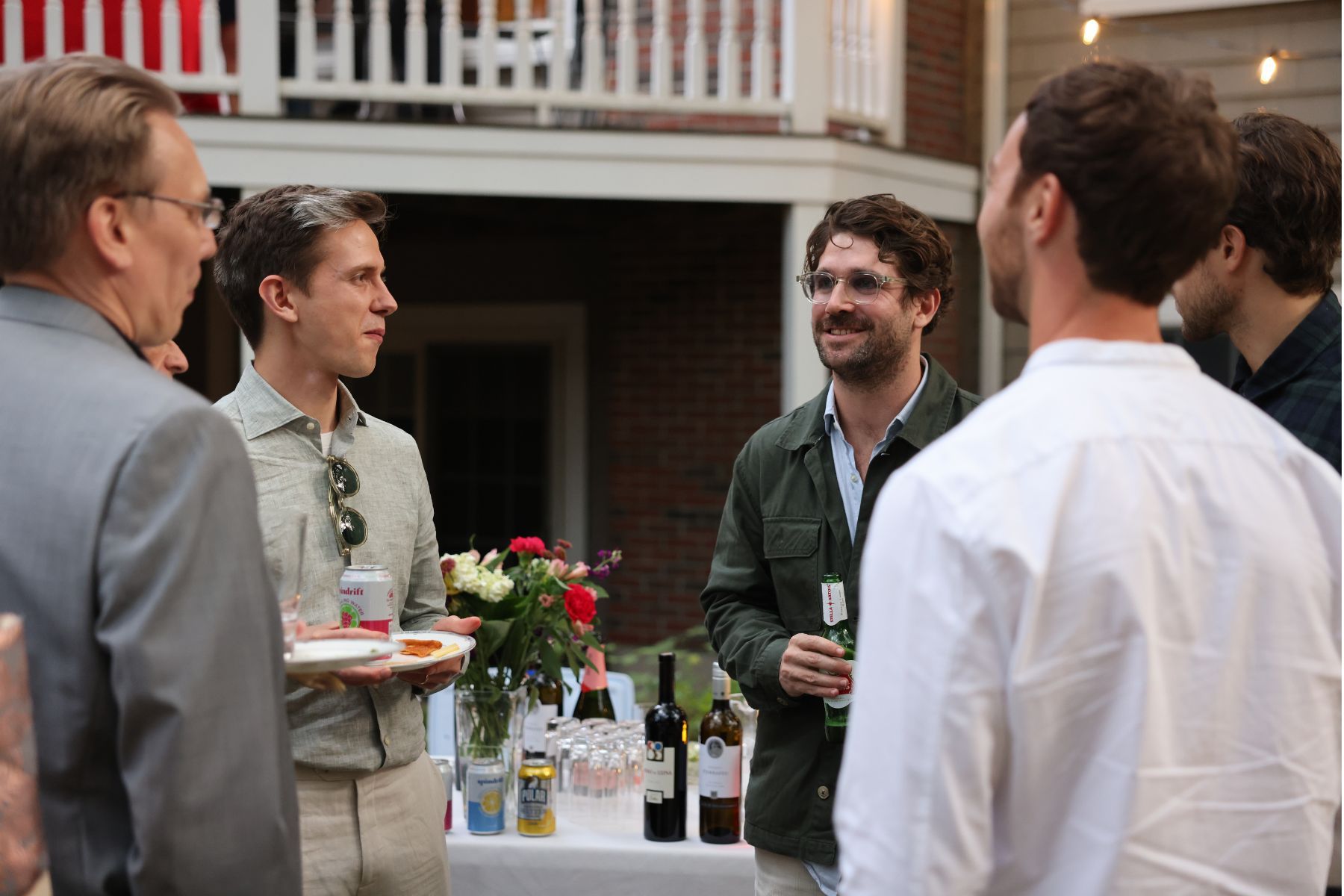
The first week took place in Boston, where the startups discovered a vibrant ecosystem driven by collaboration among research institutions, startups, investors, and public initiatives. The cohort participated in workshops on pitching, hiring, and product fit, received feedback from experienced investors at the Climate Collider Garden Party hosted at the Swiss residence, and met with key organizations such as MassCEC, the Alliance for Climate Transition, and Greentown Labs—the world’s largest climatetech incubator. A day trip to New Haven introduced them to ClimateHaven, Yale’s sustainability ecosystem, and local early-stage investors.
In the second week, the cohort headed to New York for Climate Week NYC, the world’s largest climate action gathering. The startups joined over a thousand events, connecting with investors, partners, and peers. They also took part in Swissnex’s Planetary Embassy, with several founders presenting at the Climatetech Investor Summit and Food Circularity in Action.
Beyond introductions to investors, the participants highlighted the value of peer-to-peer learning. “There’s a big difference in how companies are built in Switzerland versus the U.S.,” said Danny Chatziprodromou, founder of REOR20, which uses physics-based AI to analyze flood risk. “Transitioning to the U.S. market means overcoming cultural differences.” Workshops on pitching and feedback sessions helped participants navigate these challenges. “This program really helped me understand what to pay attention to and how to approach the U.S. market,” said Estelle Clerc, co-founder and CEO of CellX Biosolutions, which uses bacteria to break down persistent pollutants.
Exploring both Boston and New York gave the cohort valuable insight into the strengths of different ecosystems. “The program helped us understand how each city works and the benefits for Swiss companies entering the U.S.,” said Jonathan Comotti, head of sales at KITRO, which uses AI to reduce food waste in commercial kitchens. Still, as Halter noted, “Boston is a great place to be – but it’s expensive. You have to really need to be here.”
Above all, the founders valued the sense of community. “The peer learning was as important as meeting VCs or learning to pitch,” said Marvin Campbell, CEO of Hertzfeld Bioenergie, which develops circular solutions for biological, medical, and glass waste. “I built strong connections with other founders, especially those with more experience. It helped me understand not only their European strategies but also how they approach the U.S. market,” added Clerc.
By the end of the program, the startups left with new perspectives, practical tools, and promising leads across the Northeast.
December 1 -5, 2025 / State Secretary for Education, Research and Innovation Dr. Martina Hirayama led a science mission to San Francisco, Washington, D.C., and Boston...